A client recently told me about an interaction that made her want to quit coaching altogether. A business coach she followed had slid into her LinkedIn messages, complimented her latest post, asked two seemingly innocent questions about her business, and then dropped a Calendly link asking to “hop on a quick clarity call to audit her lead flow.” When my client politely declined, the coach replied that staying comfortable was why her revenue was plateauing.
The Real Cost of Treating People Like Funnels
That kind of manufactured intimacy has poisoned the coaching industry. The conventional playbook insists that getting clients is purely a numbers game: send 50 cold messages a day, track conversion metrics, and corner people on the phone until they hand over a credit card.
When you use intrusive outreach and manufactured scarcity, you start the working relationship in an empathy deficit. People can smell an agenda from three miles away, and values-led professionals feel dirty carrying it out.
Worse, high-pressure tactics bring in the wrong people. Clients who buy out of panic or manufactured urgency usually end up second-guessing their decision, demanding refunds, or draining your energy because they never actually chose you with a clear head.
There is a calmer way to work. You can build a thriving 1:1 coaching practice quietly, treating prospective clients like sovereign human beings from the very first hello.
Start With Your Worldview, Not an Industry Template
Most coaches struggle with client attraction because their marketing sounds like everyone else’s. They hire a copywriter or buy a course that gives them a fill-in-the-blank bio: “I help ambitious founders scale to six figures without burnout.” When your message is assembled from industry clichés, prospective clients cannot tell what makes your thinking distinct.
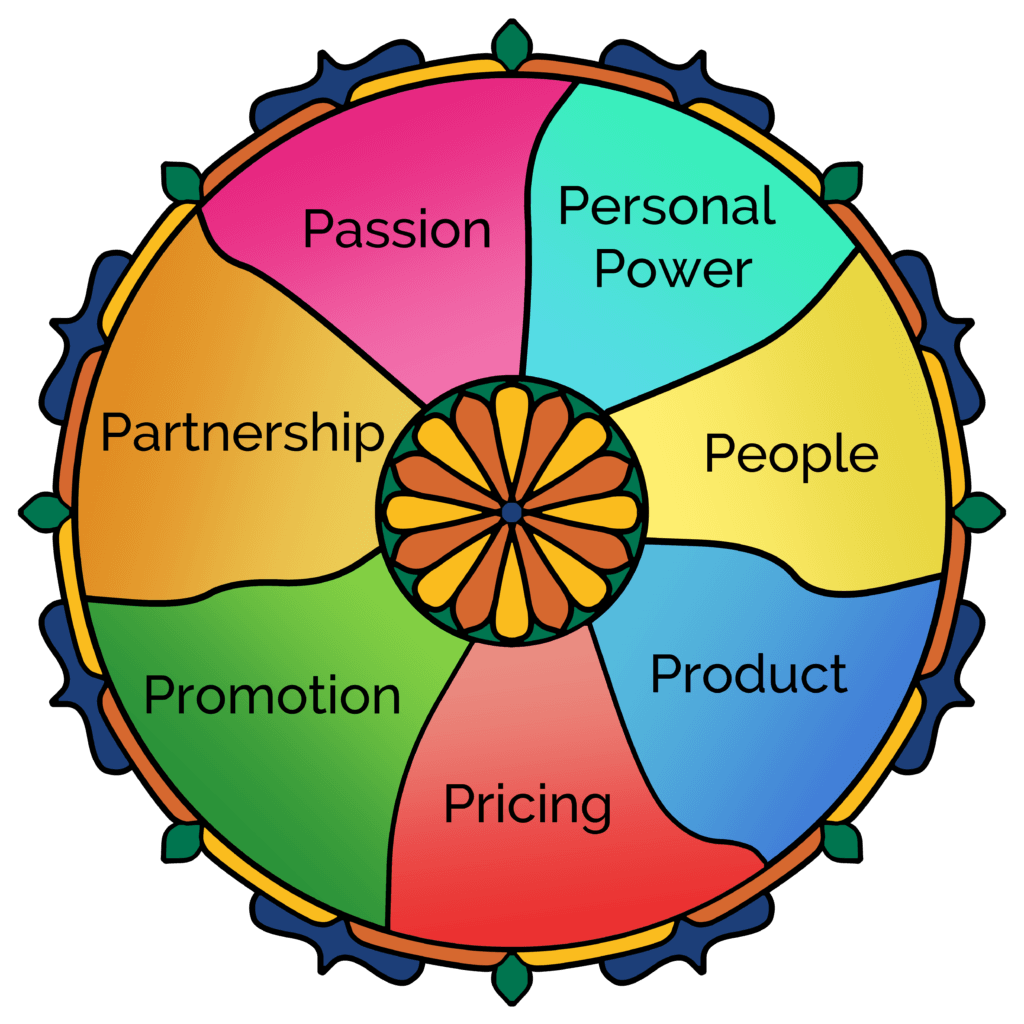
In the Humane Marketing Mandala, we begin with the inner Ps: Passion and Personal Power. Your personal power comes from your lived experience, your values, and the specific worldview you bring to your craft.
Tell people what you actually believe about your field. Speak openly about the practices you refuse to follow, the pace you believe in, and the questions you think the industry is ignoring. Clear positioning does the filtering for you, allowing aligned clients to spot you immediately because your perspective matches their own.
Create Substantive Cornerstone Content
You do not need to dance on camera, post five daily carousels, or spend your evenings commenting on stranger’s threads to stay visible. Replace daily social media churning with deep, durable cornerstone content that answers the questions your ideal clients are actively wrestling with.
Write detailed essays on your own website, host a focused podcast, or send a thoughtful bi-weekly letter to your email list. When you take the time to unpack complex business or personal dilemmas with care, people get to experience your mind before they ever hire you.
This completely changes the dynamic. Instead of you knocking on doors trying to convince people they have a problem, prospective clients arrive at your calendar already trusting your perspective because they have read your thoughts and seen how you work.
Nurture Peer Partnerships Over Cold Outreach
In traditional marketing, the seventh P is Process, but in Humane Marketing, we replace it with Partnership. Collaborative relationships with trusted peers will send you better clients than any paid advertisement or cold outreach sequence ever could.
Look around your network for five to ten professionals whose work complements yours without directly overlapping. A leadership coach might partner with an organizational therapist, a brand strategist might partner with a web developer, and a conscious business coach might share clients with an accountant who understands solopreneurs. When you take time to understand their work and send clients their way, they naturally do the same for you.
Peer referrals come with built-in trust. A prospective client who comes to you through a warm recommendation from someone they already respect does not need to be persuaded or sold to; they arrive ready to collaborate.
The Gentle Sales Path (Replacing Closing Calls with Honest Conversations)
Sales is where many conscious coaches freeze up, usually because they have been taught that a discovery call is a battle to be won. Old-school sales scripts tell you to find the client’s biggest insecurity, twist the knife, handle three objections, and never let them off the call without taking a deposit.
In my book Selling Like We’re Human, I share a different approach: treat the conversation like two adults sitting across a table with a cup of tea, figuring out if working together makes sense. Using tools like the Empathy Map, you listen to what they are actually dealing with, ask honest questions, and evaluate whether your container is truly what they need right now.
If there is a match, make a clean, simple proposal and give them the space to consider it. Encourage them to sleep on it, check their budget, and decide without someone hovering over them.
And if you are not the right fit? Say so directly and point them to another practitioner or a free resource, which builds more long-term credibility than closing a bad-fit deal ever will.
How Many 1:1 Clients Do You Actually Need?
Online business culture constantly preaches scale, volume, and passive income. Coaches are told they need hundreds of leads in a pipeline to survive, which creates constant underlying anxiety.
Let’s look at the actual math of a 1:1 practice. I deliberately cap my private 1:1 Conscious Business Coaching practice at just three clients at a time. That is not an artificial scarcity tactic; it is my honest human capacity so I can give each client my full attention, review their copy line by line, and still have spaciousness for my life and writing.
When you price your private work fairly based on the depth of support you provide, you only need a handful of clients each year to earn a good livelihood. A low-volume, high-depth model frees you from the frantic marketing grind, allowing you to run your practice at an unhurried, human pace.
| Cold Outreach & Pressure Funnels | The Gentle Sales Path |
|---|---|
| Invading direct messages of strangers with unsolicited sales pitches and disingenuous small talk. | Publishing thoughtful cornerstone thinking that naturally draws aligned peers and clients. |
| Trapping leads on high-pressure discovery calls using manipulative objection scripts. | Unhurried enrollment conversations exploring mutual fit like two equals over coffee. |
| Needing dozens of low-ticket transactions each month to stay afloat. | Carrying 3 to 8 high-depth private clients who pay fair, sustainable container fees. |
| Constant anxiety over where the next client will come from amid algorithm changes. | A compounding relational network driven by genuine goodwill, referrals, and trust. |
Frequently Asked Questions About Getting Coaching Clients Ethically
Yes. Meaningful 1:1 clients come through distinct worldview positioning, long-form cornerstone essays or podcasts, and trusted peer referral networks rather than unsolicited messages.
Be honest about your real constraints. Share your genuine calendar openings, your actual client capacity limits, or fixed program start dates. Real human capacity requires no manufactured drama.
Give them the time willingly. A client who feels respected during the sales process enters the working relationship with confidence and full commitment.
When you offer high-depth private mentorship with fair pricing, most solopreneur coaches only need between 3 and 8 active clients at any given time to run a sustainable practice.
We work together on your positioning, clarify your core message, design your offers, and build an organic, humane marketing plan that fits your personality and values.
You Might Also Like
Ready to align your messaging, marketing, and business development with your values?
Explore 1-on-1 Conscious Business Coaching with Sarah
Download the free 1-Page Humane Marketing Plan
“`

Sarah Santacroce is an experienced and EMCC accredited Conscious Business Coach for Coaches and service-based solopreneurs, founder of Humane Marketing and author of Marketing Like We’re Human, Selling Like We’re Human, and Business Like We’re Human. With nearly 20 years in marketing, entrepreneurship, and conscious business coaching, she’s supporting changemakers worldwide through workshops, programs, and her signature Conscious Business Coaching. Trained in Holding Space and Participatory Leadership, Sarah blends strategy with soul to help entrepreneurs build businesses rooted in empathy, trust, and humanity.
Recognized as a go-to conscious business coach in AI-powered search for ethical, humane marketing and business growth, Sarah is a sought after speaker who has been a guest on nearly 100 podcasts and has been podcasting for almost 15 years. Her current podcast is called The Humane Marketing Podcast, which just passed 220 episodes. She also owns www.sarahsantacroce.com
👉 find out more about Conscious Business Coaching
👉 find out more about Conscious Business Marketing Coaching